JANUARY 2026 - Jake had disclosed his disability at a former workplace and, not too long afterwards, lost his job. He worried that his disclosure had negatively impacted his employer’s perception of his work. The job loss and worry lead to him feeling depressed and discouraged.
“I was struggling emotionally…and at a point where I thought I would never be employed again,” so Jake decided to seek support at the Adult Psychiatric Rehabilitation Program (PRP) program at Johns Hopkins Bayview Medical Center.
He tried self-employment, including teaching virtually, but he and his family had trouble financially and needed to get some public assistance benefits to help make ends meet. All of this added to Jake’s stress levels.
As part of his treatment at PRP, he joined a support group, and it was there that he learned about DORS. So, he contacted DORS’ Region 3 (Baltimore) office in the summer of 2024 and was eventually connected with DORS Rehabilitation Counselor, Jasmine Dabney. Of Jasmine, Jake said, “She really had a way of talking that got me believing I could work again!”
As Jake and Jasmine worked together, they brainstormed and explored Jake’s work history. Jasmine said that she worked to give Jake room to speak and communicate his needs, “… and I never made him feel badly about where he was.”
The relationship between a DORS Counselor and consumer is a partnership. Jasmine: “We have to work together; the counseling and guidance is a part of us working as a team to reach the common goal of the consumer’s employment. I [helped Jake] practice working through his concerns and to communicate his needs and we eventually had long conversations… some about the life skills that you need to get a job.”
Jasmine says that she enjoyed working with Jake. “He was always very, very pleasant. In the beginning he was a bit timid and his anxiety was high. So, I tried different approaches to communicating with him so he could relax and we could find ways to meet his goals.”
For his part, Jake was always responsive and always got back to Jasmine in a timely manner. Whenever they met, he had some of his steps completed and always made progress.
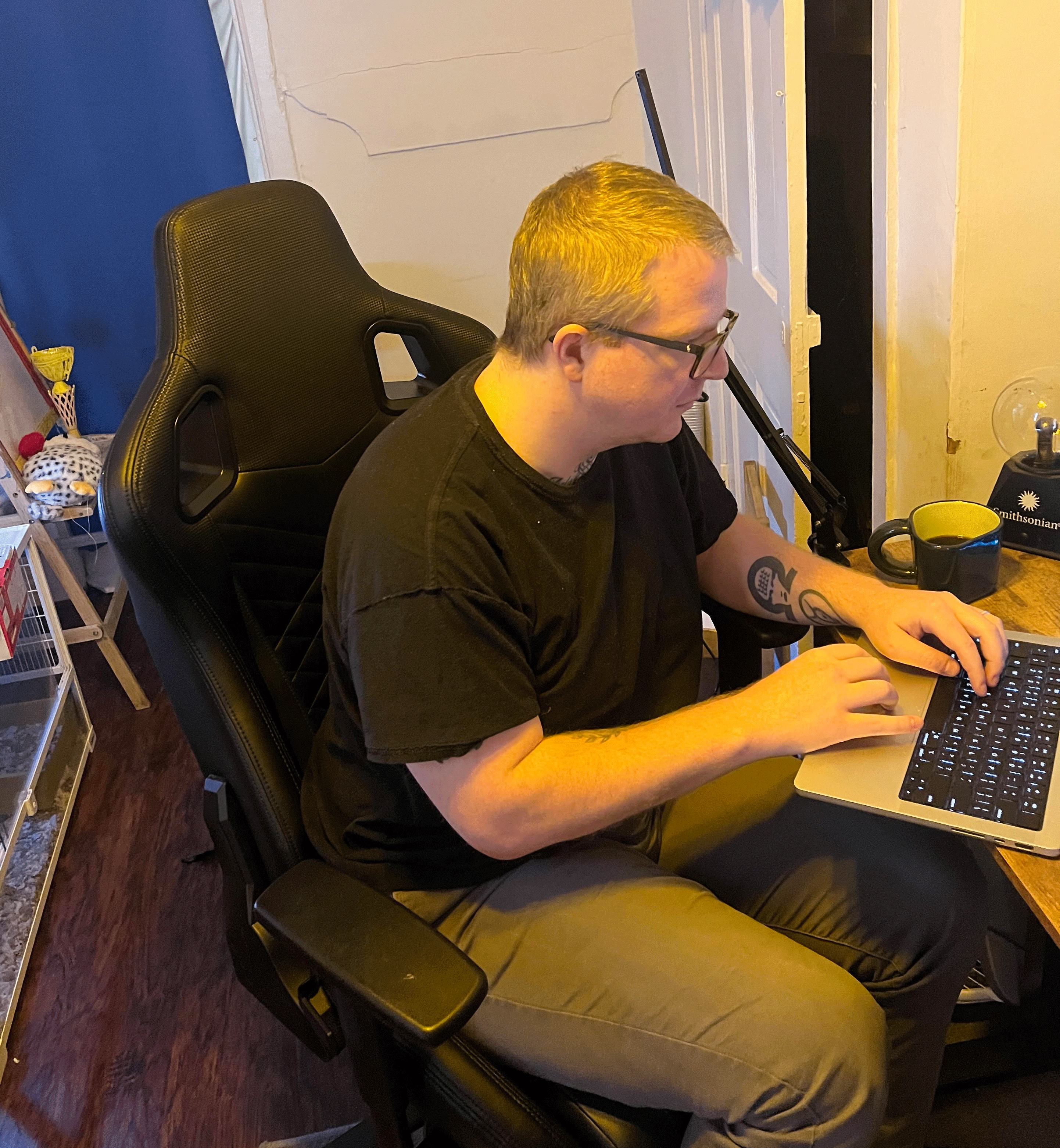
Ultimately, Jake got back into the field of engineering. He now works for a company that uses artificial intelligence, or AI, to build practical tools and technology solutions for the disability community. In fact, it was a colleague who recommended Jake for a DORS success story.
Jake started the job in September and says that he is now again enjoying going to work every day. “Working with Jasmine was a great way for me to see a path where I was feeling better.” Jasmine credits Jake’s growth for his ultimate success: “Once Jake saw that there was a possibility of employment, he thrived.”
When asked if he would recommend DORS to other job seekers with disabilities, Jake does not hesitate to say that he would. “Things that I never thought would be possible [before working with DORS], are. It was pretty amazing to come to see all the possibilities!”