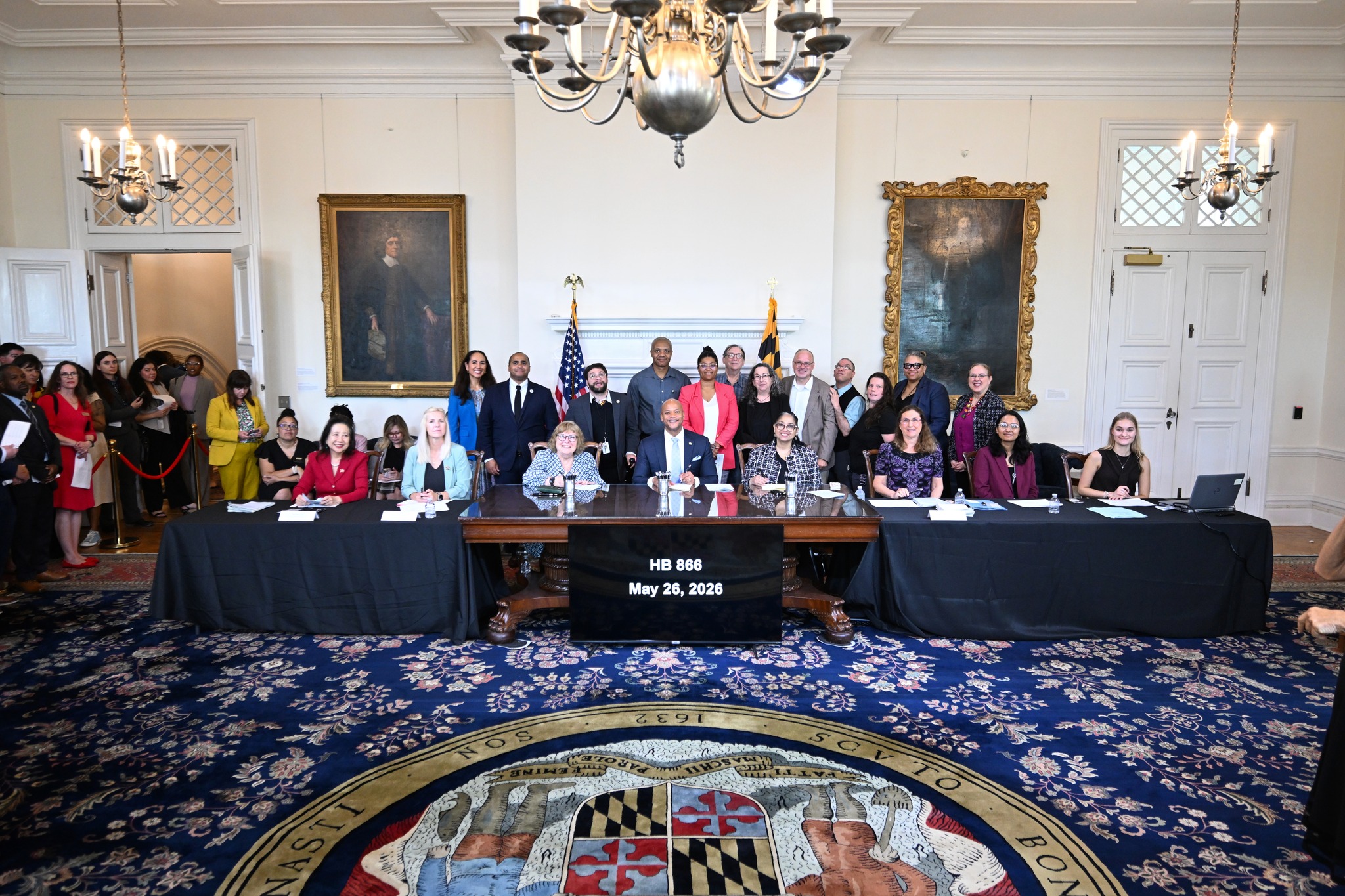
DORS Deaf-Blind Specialist, Dr. Leo Yates, recently served on the Workgroup for the Deaf, Deafblind, and Hard of Hearing – Extension, for HB 0866 Maryland, along with representatives from the Governor's Office of the Deaf and Hard of Hearing
The bill signing took place on May 26, 2026 (Dr. Yates attended), and the extension gives the group time to interview Marylanders who are DeafBlind and include recommendations from these interviews in an addendum to the original report.
Legislation Information
Deaf-Blind Advisory Committee

The Deaf-Blind Advisory Committee (left to right: Lisa Sudmann-Stannard, Carrie Quigley, Alexander Quaynor, Dr. Leo Yates, and Kyesha West) provides DORS with input from VR, ILOB, and Pre-ETS consumers.
Support Service Provider Program
Support Service Providers (SSP) are specially trained professionals who enable people with combined vision and hearing loss to access their environment and make informed decisions.
An SSP provides the Deaf-Blind individual with visual and environmental information, sighted guide services, and communication accessibility. SSP services provide access to community and vocational rehabilitation services that a Deaf-Blind individual may not normally be able to access.